The Man Who Couldn't Get a Word Out — Until the Whole Senate Went Silent
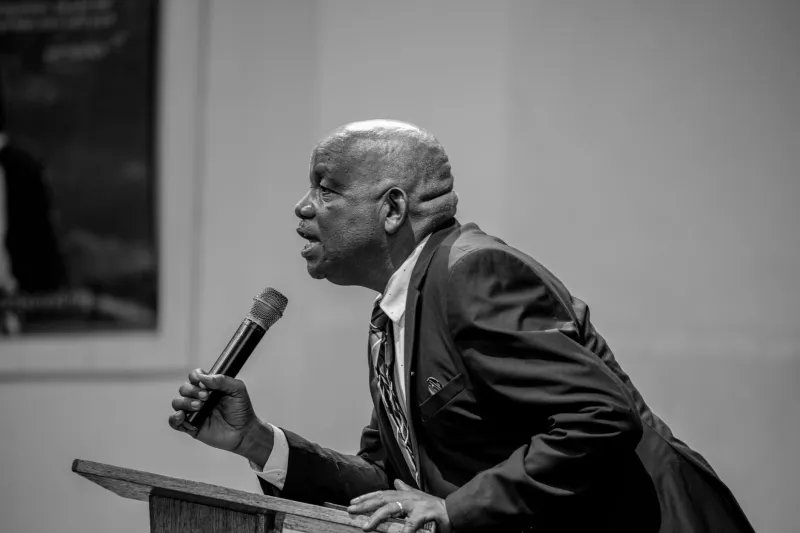
The Man Who Couldn't Get a Word Out — Until the Whole Senate Went Silent
There's a particular kind of silence that falls over a room when a speaker has truly found their moment. Not the polite silence of an audience waiting for the next slide, or the restless quiet of people checking their watches. The silence that means something. The silence that means stop, listen, this matters.
Byrne Calloway Whittaker knew that silence better than almost anyone who ever stood at a Senate lectern. He also knew, better than most, what it cost to earn it.
 Photo: Byrne Calloway Whittaker, via pictures.abebooks.com
Because for the first three decades of his life, Whittaker — a senator from a mid-sized Southern state whose career peaked in the late 1940s and early 1950s — could barely get through a sentence without it buckling under him.
A Stammer That Followed Him Everywhere
Whittaker was born in 1901 in a small mill town in rural Georgia, the third son of a Methodist preacher and a schoolteacher. By the time he was seven, his stutter had become the defining fact of his childhood. He could read fluently, think quickly, argue brilliantly in the private theater of his own head — but the moment he opened his mouth in public, the words seized up like an engine with no oil.
School was a quiet ordeal. Teachers called on him less. Classmates found kinder ways to fill the space when he struggled. His father, a man whose livelihood depended on the power of spoken language, reportedly never once drew attention to the stammer — which was itself a kind of painful acknowledgment that it was too significant to mention casually.
What Whittaker did, in the absence of easy speech, was read. Voraciously, obsessively, the way kids in difficult circumstances often pour themselves into the one thing that doesn't push back. He read law. He read history. He read the congressional debates of the Civil War era, the speeches of Frederick Douglass and Daniel Webster, the floor arguments of men who had used language to move mountains. He wasn't just reading for pleasure. He was studying.
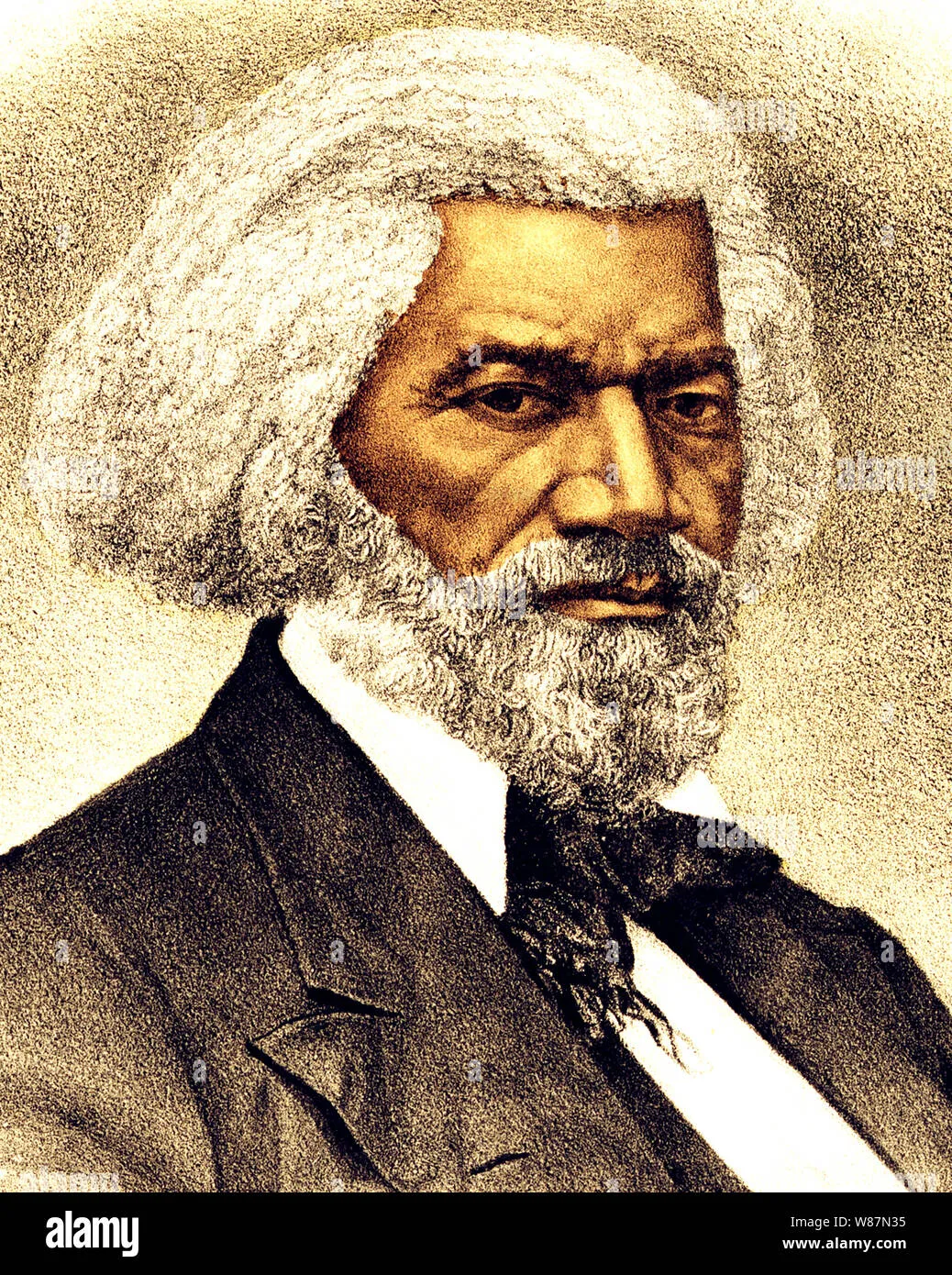 Photo: Frederick Douglass, via c8.alamy.com
The Career Everyone Told Him Not to Try
When Whittaker announced, at twenty-six, that he intended to run for a seat in the Georgia state legislature, the reaction from the people who cared about him most was uniformly discouraging. His law school mentor — a man who genuinely admired Whittaker's legal mind — sat him down and told him plainly that voters wouldn't trust a man who struggled to speak. A cousin who worked in local politics said the same thing, more gently. Even his wife, by his own later account, wondered aloud whether there was a better way to serve.
He ran anyway. And he lost. Badly.
What happened next is the part of the story that history tends to skip, because it isn't dramatic in the conventional sense. There was no single turning point, no overnight transformation, no moment where the stammer simply disappeared. Instead, Whittaker spent the next several years doing something almost no one in his position would have thought to do: he leaned into the difficulty rather than away from it.
He hired a voice coach, not to eliminate the stammer, but to understand it — to learn where in his speech patterns it was most likely to surface, and to restructure his sentences around those fault lines. He began writing his remarks with the stammer already accounted for, placing his most critical words in positions where his fluency was strongest. He learned, through years of grinding practice, that slowing down didn't just help him speak — it made people listen differently.
What the Struggle Built
By the time Whittaker finally won a state senate seat in 1934, and eventually a U.S. Senate seat in 1944, something unexpected had happened. The man who had once been told his voice would never carry a room had developed an approach to public speaking that was unlike anyone else in American politics at the time.
He was deliberate in a way that felt almost theatrical. He paused where other speakers rushed. He chose words with a precision that colleagues found almost unnerving — not flowery or elaborate words, but exact ones, the kind that landed without ambiguity. He had no filler. No verbal wandering. Every sentence had been pre-tested in his own mind against the obstacle course of his stammer, which meant every sentence that made it out had already survived a kind of internal editing process that most speakers never apply.
Journalists covering the Senate in the late 1940s began to notice. One Washington correspondent wrote that listening to Whittaker speak was like watching someone thread a needle in slow motion — you couldn't look away, and when it worked, the effect was startling.
Opponents learned not to underestimate him on the floor. A senator who had privately mocked Whittaker's speech difficulties in his early years later admitted, in a memoir, that debating Whittaker directly was one of the most uncomfortable experiences of his political career. "He never wasted a word," the senator wrote. "And he never missed."
The Speeches That Mattered
Whittaker's most celebrated moments came during the postwar debates over federal housing policy and civil rights legislation — issues where the political stakes were enormous and the rhetorical battles were fierce. He was not the loudest voice in those fights. He was rarely the most quoted in the newspapers the following morning.
But among his Senate colleagues, his floor speeches became events. When Whittaker rose to speak, the chamber had a habit of quieting in a way it didn't for most members. Partly this was the curiosity of watching a man navigate a stammer in real time. But mostly — and this is the part that his admirers consistently emphasized — it was because everyone in the room had learned that what he was about to say would be worth hearing.
He retired from the Senate in 1959 and died in 1971, largely forgotten outside the circles of political historians who specialize in mid-century Southern moderates. He never wrote a memoir. He gave few interviews in his later years.
The Invisible Superpower
What Whittaker's story leaves behind isn't really a story about overcoming a disability. It's something more specific and more interesting than that. It's a story about what constraints force you to build.
Speakers who have always had easy access to their own voices rarely develop the relationship with language that Whittaker had. Why would they? When words come freely, there's no pressure to make each one count. When every sentence is a negotiation, you negotiate carefully.
The stammer that his mentors saw as disqualifying turned out to be the thing that made him irreplaceable. The struggle to be heard sharpened what he said until it cut clean.
That's not an accident. That's what difficulty does, when you refuse to let it be an ending.