The First Lady Who Ran the White House — And the Country — From Behind a Closed Door
The Stroke That Stopped a Presidency
On October 2, 1919, Woodrow Wilson collapsed in the White House. The stroke was devastating — it left the president partially paralyzed, nearly blind in one eye, and cognitively impaired in ways his inner circle worked frantically to conceal. The United States was in the middle of a brutal political battle over the Treaty of Versailles and American entry into the League of Nations. The world was watching. And the man at the center of it all could barely hold a pen.
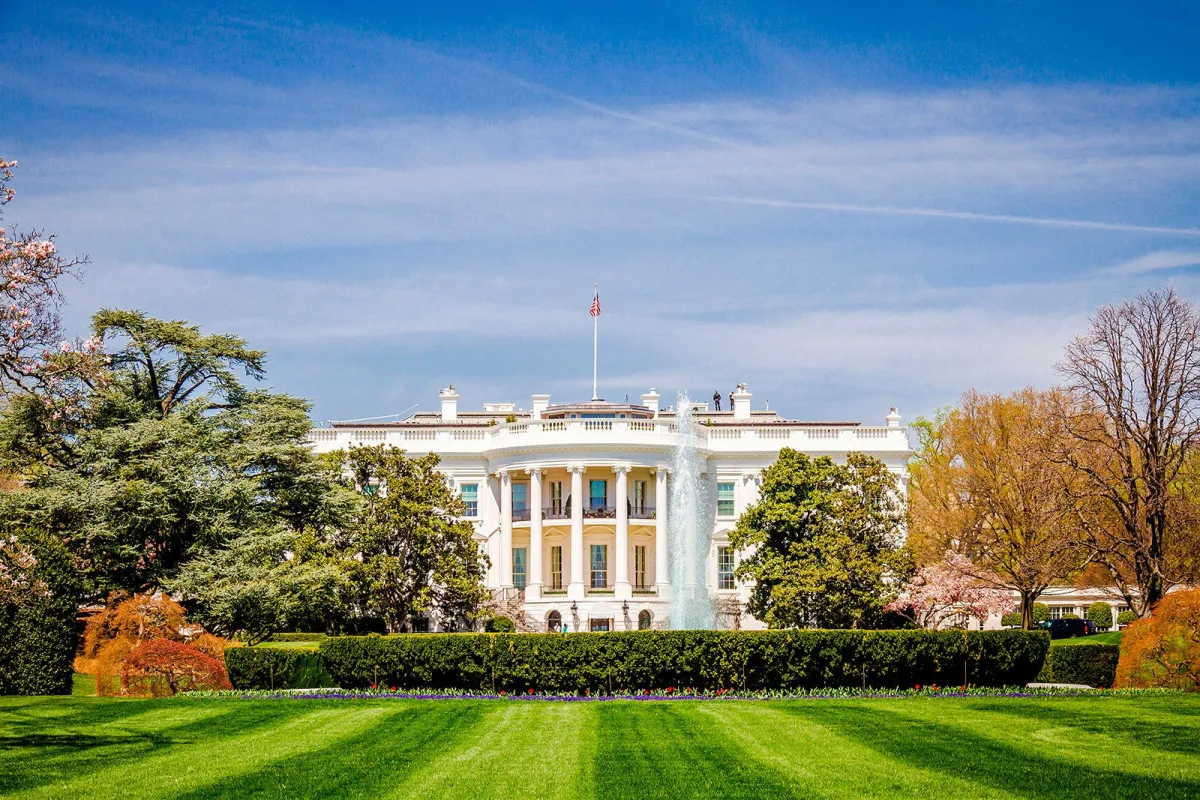 Photo: White House, via washington.org
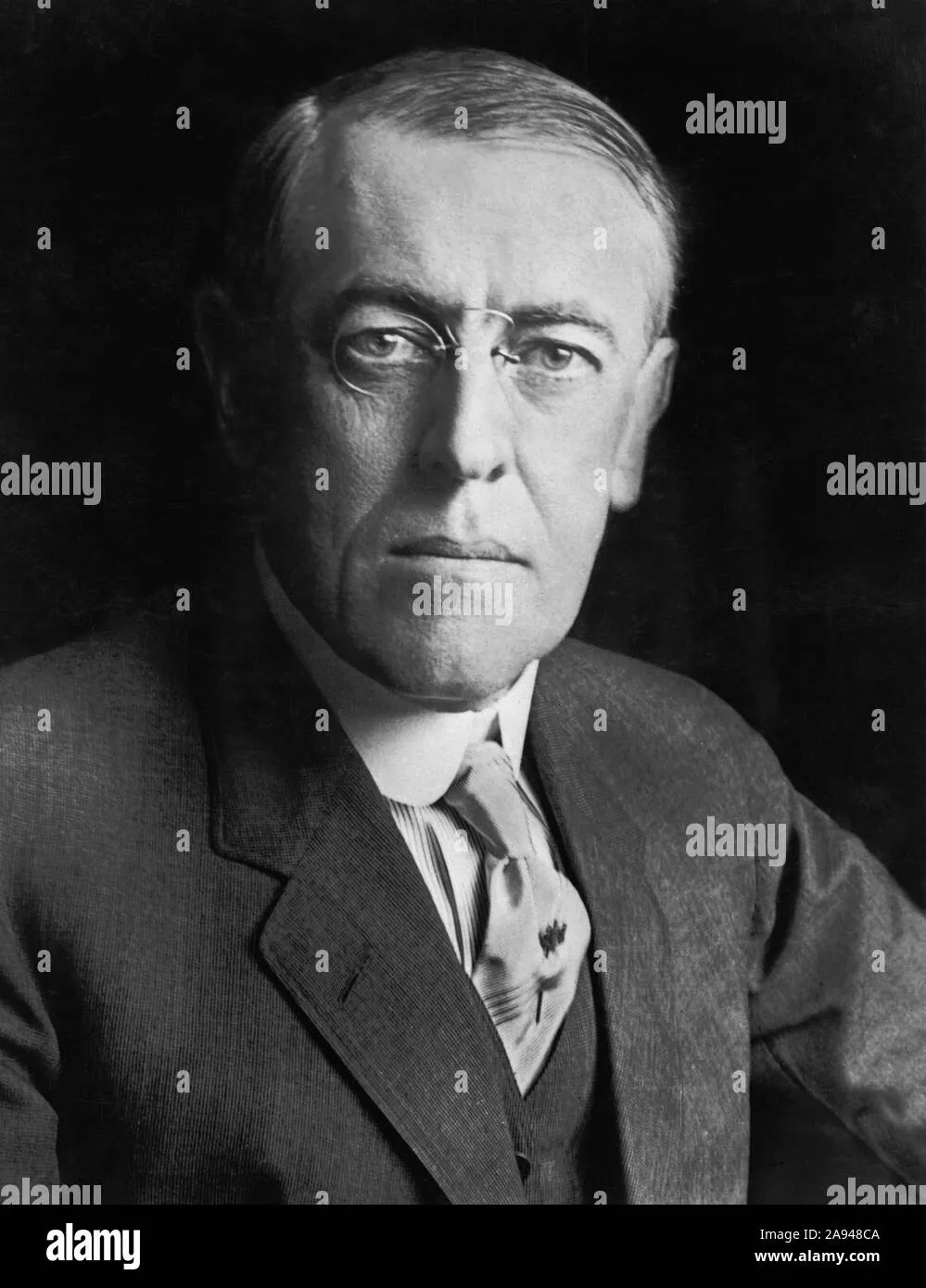 Photo: Woodrow Wilson, via c8.alamy.com
What happened next is one of the most remarkable — and troubling — stories in American political history. It doesn't belong to a general or a senator or a cabinet member. It belongs to Edith Bolling Wilson, the president's wife, a woman who had never held public office, never sought political power, and had been married to Woodrow Wilson for less than four years.
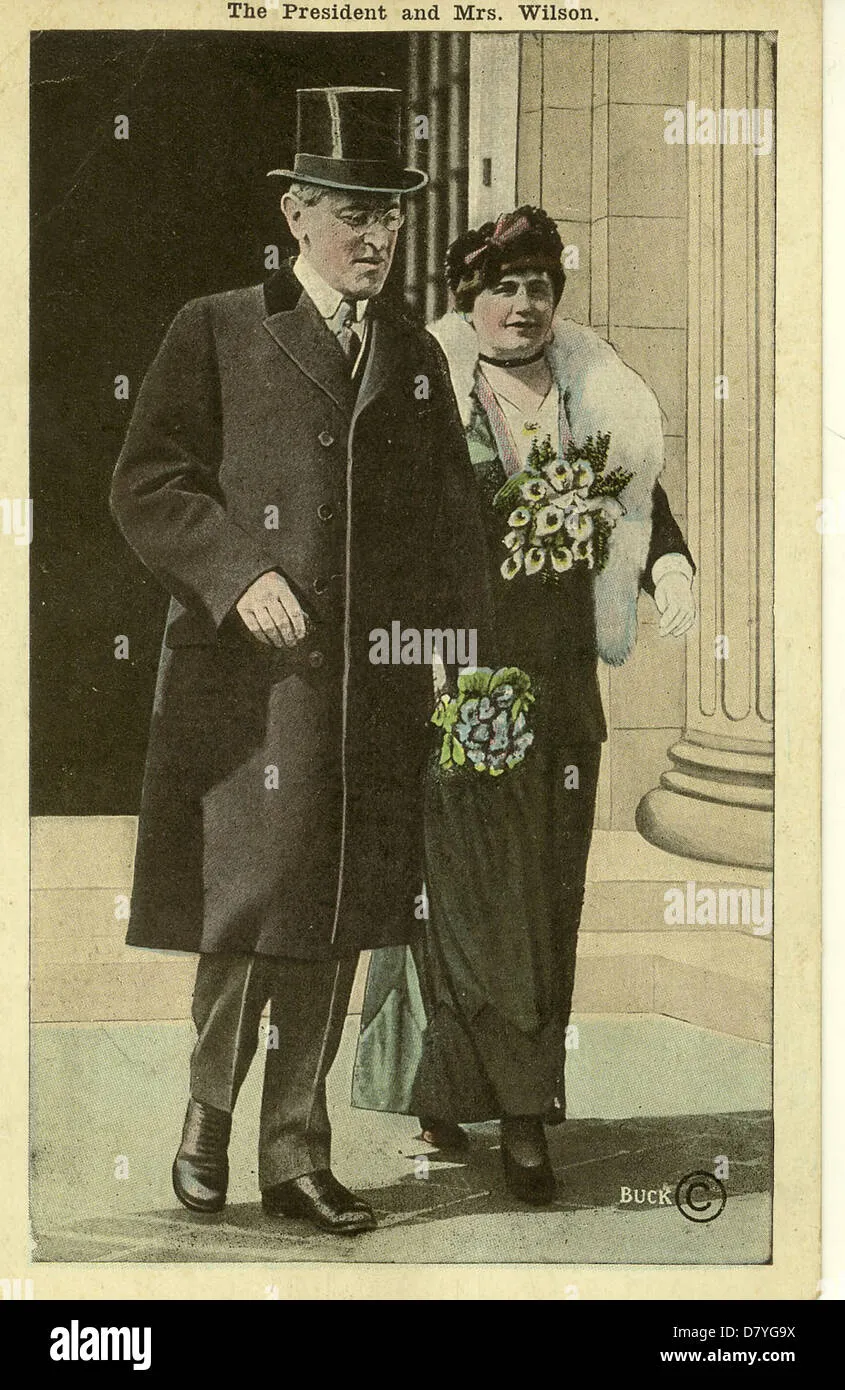 Photo: Edith Bolling Wilson, via c8.alamy.com
For the next seventeen months, until Wilson's term ended in March 1921, Edith Wilson was, in every practical sense, the gatekeeper of the American presidency. Some historians go further than that.
A Woman Who Never Wanted the Job
Edith Wilson was not a political creature. Born in rural Virginia in 1872, she had grown up in modest circumstances, been widowed young, and built an independent life running a jewelry business in Washington, D.C. before meeting Wilson in 1915. She was sharp, self-possessed, and fiercely devoted to her husband — but she had no particular interest in governance. When she married the president, she stepped into the role of First Lady with grace and discretion, not ambition.
That changed on the morning of October 2nd.
In the immediate aftermath of Wilson's stroke, it was Edith — not the vice president, not the secretary of state, not the White House chief of staff — who made the first critical decision: the public would not know how bad it was. She and the president's doctor, Cary Grayson, agreed that the full extent of Wilson's condition would be kept secret. The official story was that the president was suffering from exhaustion and a nervous breakdown. He needed rest. He would recover.
He did not recover. Not really. And so Edith Wilson got to work.
The Stewardship She Invented on the Fly
Edith later described her role during this period as a "stewardship" — a careful, modest word for something that was anything but modest. In practice, what she did was this: she became the sole conduit between the incapacitated president and the rest of the world.
Every document that needed Wilson's attention passed through her first. She decided what was urgent enough to reach him, summarized it in her own handwriting, and delivered his responses — sometimes in writing, sometimes by relaying what he'd said to her in private. Cabinet members who needed presidential decisions sent their requests to Edith. Senators seeking meetings were told the president was unavailable. Foreign dignitaries were kept at arm's length.
She did not, as far as historians can determine, fabricate presidential decisions wholesale. But she shaped what her husband saw, filtered what reached him, and interpreted his responses for an administration that was increasingly desperate for direction. The line between facilitating a president's wishes and exercising presidential power herself is, in this period, genuinely difficult to locate.
Some officials at the time suspected the truth. Secretary of State Robert Lansing quietly began holding cabinet meetings without Wilson's knowledge — a move that, when Wilson found out, got Lansing fired. The irony was rich: the man punished for overstepping was one of the few people trying to maintain some form of governmental function, while the actual power vacuum was being filled by a woman with no constitutional role whatsoever.
What the Country Didn't Know
The American public had almost no idea. Newspapers reported on Wilson's illness in vague terms. The White House released carefully managed bulletins. Photographs were staged to suggest a president still engaged and in control. In an era before television, before the twenty-four-hour news cycle, before the kind of scrutiny that makes modern political cover-ups nearly impossible, a determined inner circle could keep a very large secret.
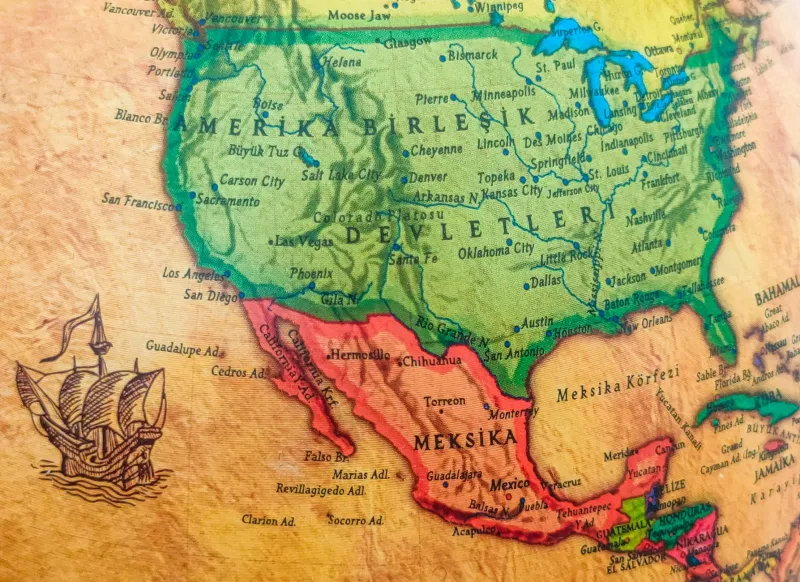
Congress grew suspicious. Senator Albert Fall of New Mexico — later infamous for his role in the Teapot Dome scandal — demanded a meeting with the president to verify that he was capable of governing. The meeting was arranged, carefully choreographed. Wilson sat in bed, covered by blankets that concealed his paralyzed left side. Edith was present throughout. Wilson managed to hold the conversation well enough to satisfy his visitors, at least on the surface.
Fall reportedly left the meeting and told colleagues that the president seemed fine. Whether he genuinely believed it or simply didn't want to confront what he'd seen is a question that history hasn't fully resolved.
The Question That Still Hangs in the Air
Edith Wilson lived until 1961, long enough to see her husband's legacy canonized and her own role in his final years become a source of ongoing historical debate. She always maintained that she had served as nothing more than a devoted wife protecting a sick husband — that every decision had been his, that she had only managed the paperwork.
Historians are divided. Some take her at her word, pointing out that no evidence exists of Edith actively countermanding or inventing presidential positions. Others argue that the distinction barely matters: when you control what a leader sees, hears, and responds to, you are exercising power regardless of what you call it.
What's harder to dispute is the broader implication. The United States, in the final stretch of World War One's aftermath, during the fight over the League of Nations, during a period of labor unrest, racial violence, and the first Red Scare, was effectively being administered by a woman who held no office, had taken no oath, and had been given no authority by anyone except the man lying in a darkened room who happened to be president.
She did it out of love. She did it out of loyalty. She may have done it better than the alternatives available. But she did it — and the country never got to vote on whether that was okay.
Power Without a Title
Edith Wilson's story is not a simple one, and it resists easy framing. She was not a villain engineering a coup. She was not a hero boldly seizing history. She was a woman placed in an impossible situation who made a series of consequential decisions with imperfect information and no playbook to follow.
What her story reveals is something uncomfortable about leadership itself: that power doesn't always live where the title says it does. That the machinery of government can be quietly redirected by proximity, loyalty, and sheer force of presence. That the mythology of the decisive leader at the helm sometimes conceals a much messier, more human reality.
America likes its stories of power to be legible. Edith Wilson's story isn't. That's exactly why it's worth knowing.