From the Back of the Kitchen to the Front of an Industry
The restaurant industry has always run on invisible labor. The people who make American dining possible — the prep cooks, the dishwashers, the supply chain workers who arrive before dawn and leave after midnight — are almost never the people whose names end up on the awnings or in the business profiles. The system tends to treat them as interchangeable parts rather than individuals with ambitions of their own.
Which is exactly why what Ernesto Vásquez built is so remarkable. And exactly why almost nobody outside the industry has ever heard of him.
He came to Los Angeles in the mid-1970s from a small town in Oaxaca, Mexico, part of the wave of economic migration that was quietly reshaping the labor landscape of the American Southwest. He spoke no English. He had a few hundred dollars, a cousin's address written on a folded piece of paper, and the kind of work ethic that doesn't announce itself — it just shows up every day and stays until the job is finished.
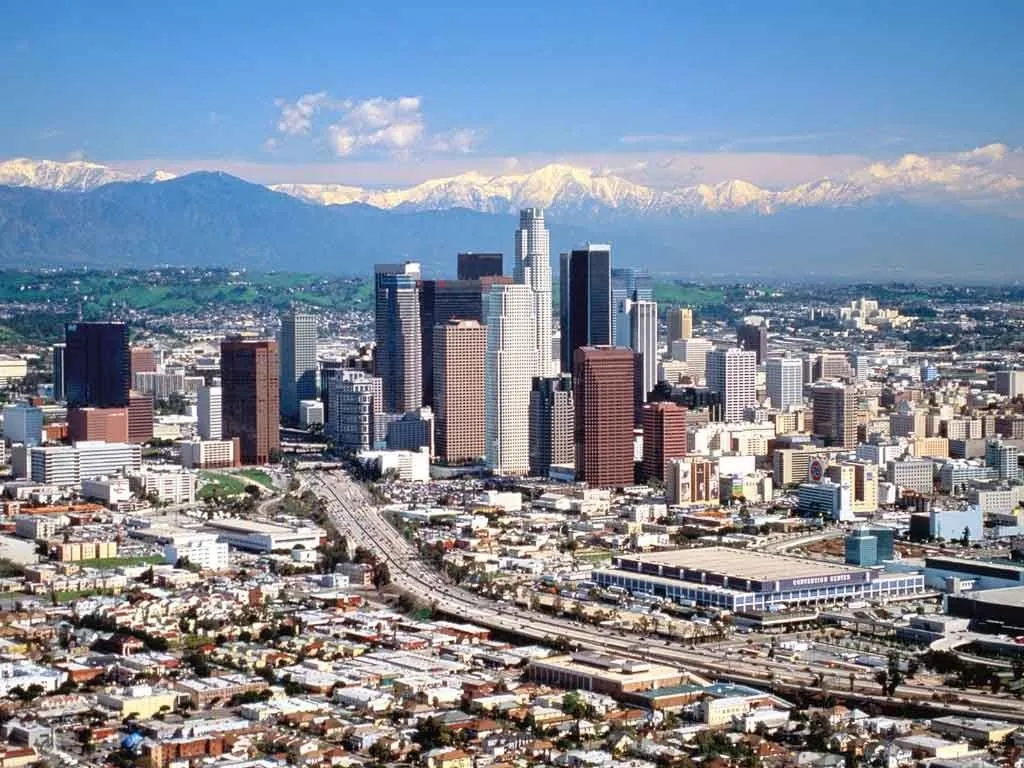 Photo: Los Angeles, via idata.over-blog.com
His first American job was washing dishes at a mid-tier Italian restaurant in East Los Angeles. He was eighteen years old.
The Education Nobody Offered Him
What Vásquez did in those early years was something that sounds simple but is actually quite rare: he paid attention to everything.
While other dishwashers clocked in, clocked out, and tried to minimize the misery of the shift, Vásquez was cataloging the kitchen around him. He watched how the chef organized prep sequences to minimize waste. He noticed which supply deliveries arrived on time and which didn't, and what happened to the menu when they didn't. He observed the way food costs fluctuated based on supplier relationships, and how those fluctuations rippled forward into what ended up on the plate.
He wasn't taking notes. He didn't have a business plan. He was just a young man from Oaxaca doing the most natural thing in the world — trying to understand the place where he spent most of his waking hours.
Over the next decade, he moved through several kitchens across Los Angeles, always taking the dishwashing or prep work that was available, always learning, always watching. He picked up English gradually, the way you learn a language when you have no choice — by necessity, in fragments, through the patience of coworkers who eventually stopped treating him as temporary.
By his late twenties, he understood the operational architecture of a restaurant kitchen as well as anyone who had actually been trained to run one. He'd just learned it from the floor up rather than the top down.
The Problem He Kept Seeing
The issue that Vásquez couldn't stop thinking about was supply. Specifically, the chaotic, unreliable, and frequently exploitative supply relationships that plagued smaller independent restaurants in Los Angeles.
Large chain restaurants had leverage with distributors. They could negotiate bulk pricing, demand consistency, and walk away from bad deals without catastrophic consequences. But the independent family restaurants — the taquererias, the small Italian joints, the Vietnamese lunch spots — were at the mercy of whoever showed up with a truck. Prices fluctuated wildly. Quality was inconsistent. And the owners, many of whom were themselves immigrants working brutal hours, had neither the time nor the contacts to do anything about it.
Vásquez saw this not as someone else's problem, but as an opportunity.
In 1987, with savings accumulated over years of working double shifts and living well below his means, he started a small produce supply operation out of a leased van. He drove to the wholesale markets in the pre-dawn hours, bought in volume, and sold directly to the small restaurants he knew from his years working in them. He offered something the big distributors didn't: reliability, fair pricing, and the trust that comes from speaking the same language — literally and figuratively — as the people he was serving.
Building Something Nobody Saw Coming
The business grew slowly, then rapidly. By the early 1990s, Vásquez had expanded from produce into dry goods, kitchen equipment, and eventually staffing — connecting restaurants with trained kitchen workers through a network he'd built through years of personal relationships.
What made his model genuinely innovative wasn't any single product or service. It was the integration. He wasn't just a supplier; he was a partner. When a restaurant owner called him because their head cook had quit the night before a big weekend, Vásquez could solve that problem. When a new restaurant needed help structuring its supply chain before opening, he had the operational knowledge — earned the hard way, over two decades of kitchen floors — to actually help.
He also began running informal training sessions for kitchen workers: food safety, prep techniques, basic English for professional kitchen environments. These weren't formal programs with certificates and fees. They were held in the back of his warehouse on Saturday mornings, and they were free. His reasoning was characteristically practical: better-trained workers meant better kitchens, and better kitchens meant clients who stayed in business long enough to keep ordering from him.
By the early 2000s, his operation served thousands of restaurants across Southern California and had expanded into Nevada and Arizona. Industry consultants who studied his model described it as something business schools hadn't really theorized yet — a vertically integrated service network built entirely on trust and community knowledge rather than capital and scale.
The Greatness That Doesn't Make Headlines
Vásquez never sought attention. He gave occasional interviews to Spanish-language trade publications, and a profile in a regional business journal in 2004 generated some interest, but he was never a conference speaker or a media personality. He had no interest in being the face of anything.
"I just kept solving the next problem," he told one interviewer. "You solve enough problems for enough people, eventually you have a business."
That understatement masks something genuinely significant. The restaurant industry in the United States is one of the largest employers in the country, and it runs on margins so thin that a single bad week can close a kitchen that's been open for twenty years. The invisible infrastructure that keeps those kitchens operational — the supply networks, the trained labor, the operational knowledge — is exactly where people like Vásquez do their work.
He started as the person nobody noticed. He became the person the industry couldn't function without.
And he did it by doing the thing that most people with ambition forget to do: he paid attention before he acted, he served before he led, and he built his empire from the ground up — starting with a mop and a very good memory.
The back of the kitchen, it turned out, had the best view of everything that mattered.