Never Too Late, Never Too Old: The Athletes Who Proved the Scouts Dead Wrong

Sports has always had a brutal relationship with time. Coaches talk about athletic primes the way economists talk about market windows — as if there's a fixed point after which the opportunity simply evaporates. Get cut at sixteen, and the assumption is that the story is over. Miss the draft, lose the scholarship, blow out a knee at the wrong moment, and conventional wisdom starts writing your eulogy before you've even left the locker room.
But conventional wisdom has a lousy track record with exceptional people.
Across American sports history, there's a stubborn and inspiring counter-narrative — athletes who were dismissed early, who spent years grinding in obscurity or rebuilding from injury or simply refusing to accept someone else's timeline, and who eventually showed up on professional rosters, Olympic teams, or championship podiums at ages when most of their peers had long since hung up their gear.
These aren't fairy tales. They're documented, sometimes startling, always instructive true stories about what separates persistence from stubbornness — and what the gatekeepers of sport almost cost the world by giving up too soon.
The Swimmer Who Found the Water Again at Thirty-Eight
Dara Torres is the most famous American example of athletic late-blooming, but her story bears repeating because its details are almost absurd in how thoroughly they defy expectation. She swam competitively in the 1980s, retired, came back for the 1988 Olympics, retired again, came back again, retired again — and then, at the age of 41, stood on an Olympic podium in Beijing in 2008, winning silver in the 50-meter freestyle and missing gold by less than a hundredth of a second.
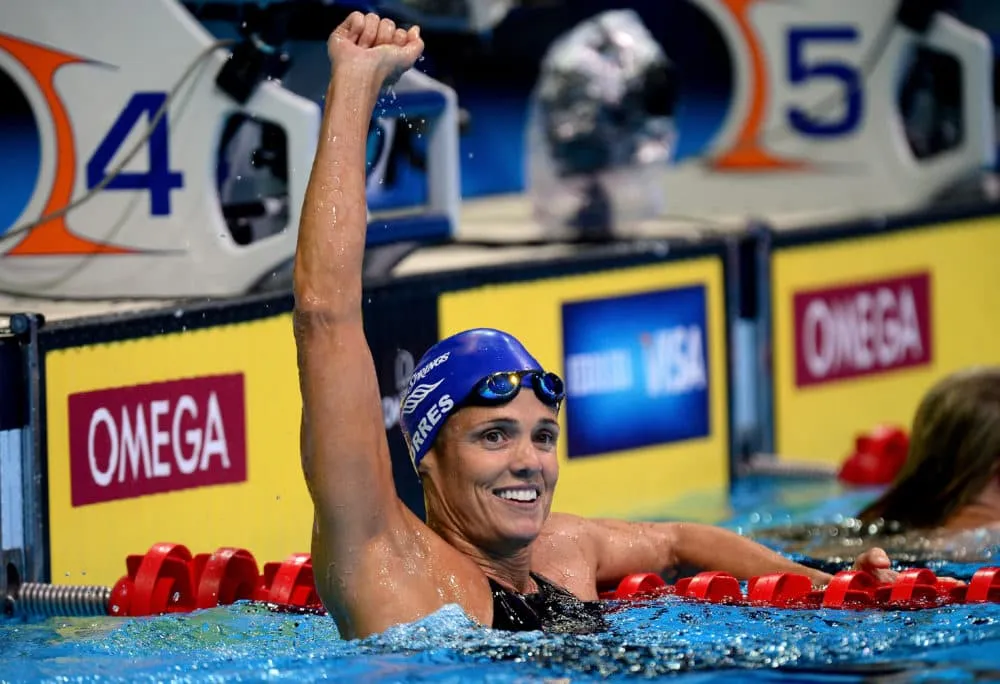 Photo: Dara Torres, via wordpress.wbur.org
She was older than some of her competitors' parents. Coaches who watched her train said her work ethic was unlike anything they'd seen at any age. The body, it turned out, had more to offer than the timeline suggested — because the mind driving it had developed something that twenty-two-year-olds simply don't have: the absolute clarity that comes from knowing exactly what you want and exactly how little time you have left to get it.
Cut at Sixteen, Signed at Thirty-Two
Less celebrated but equally remarkable is the story of a wide receiver from rural Georgia who was cut from his high school varsity squad as a sophomore — too slow off the line, his coach said, and too slight to absorb hits. He played pickup games through his twenties, worked construction, and trained on his own with a discipline that had no audience and no reward.
A semi-professional league scout happened to watch him run routes at a local park during a lunch break and asked, almost as a joke, how old he was. The player was thirty-two. The scout signed him to a developmental contract on the spot. Within eighteen months, he'd earned a spot on an NFL practice squad — not a starting role, not a Pro Bowl berth, but a professional contract in the most competitive football league on earth, at an age when most players are two years into retirement.
His former high school coach was reportedly asked about it. His response was a masterclass in uncomfortable self-reflection: "I was looking at what he was. I should have been looking at what he was becoming."
The Gymnast Who Came Back After the Accident
Gymnastics is perhaps the sport most aggressively defined by youth. Elite gymnasts typically peak in their mid-to-late teens; competing seriously past twenty-five is considered extraordinary. Which makes the story of a Midwestern gymnast who suffered a severe spinal injury at seventeen — ending what had been a genuinely promising junior career — all the more improbable.
She spent four years in recovery, two of them unable to walk without assistance. She returned to training not because anyone encouraged her to, but because she couldn't figure out how to be herself without it. She competed in regional events in her mid-twenties, largely ignored by the national establishment. At thirty-one, she qualified for the U.S. Masters Gymnastics Championships and posted scores that would have placed her competitively at events a decade earlier.
She never made an Olympic team. But she coached two athletes who did — and both of them credit her with teaching them something the standard development pipeline doesn't usually offer: what it actually looks like to want something badly enough to rebuild yourself from scratch to get it.
What the Research Actually Says
Sports science has spent decades building models around athletic development that tend to reinforce early selection and early specialization. The logic is straightforward: identify talent young, invest resources, develop through peak physical years. The problem is that the models consistently underestimate the role of psychological maturity, accumulated technique, and the particular kind of motivation that only comes from having lost something and chosen to come back for it anyway.
Studies on masters athletes — competitors who remain elite well into their thirties and forties — consistently show that what separates them isn't genetics alone. It's the capacity to train with purpose rather than habit, to use experience as a substitute for raw speed, and to maintain the emotional resilience that younger athletes often develop only after their first serious setback.
In other words, the things that made early failure so painful are often the exact things that make late success possible.
The Lesson the Gatekeepers Keep Missing
Every coach who cuts a fifteen-year-old from a roster is making a judgment call with incomplete information. That's unavoidable — resources are limited, rosters have caps, and decisions have to be made. But the history of American sport is littered with players who were evaluated on what they were at a single moment in time, rather than on the trajectory they were on or the person they were in the process of becoming.
The athletes in these stories didn't succeed despite being written off early. In a very real sense, they succeeded because of it. The rejection clarified something. It stripped away any assumption that the path would be easy or that the door would stay open. It forced a kind of self-reliance and self-knowledge that the direct pipeline from junior development to professional contract doesn't always produce.
Nobody handed them a second chance. They showed up and took one.
And that, more than any physical gift or tactical skill, is what made them worth watching in the first place.