Through Darkness Into Light: The Vision That Blindness Revealed
The Moment Everything Changed
Pete Eckert was adjusting his camera settings in Yellowstone National Park when the world began to disappear. Not all at once—that would have been merciful. Instead, his central vision faded like a photograph left too long in sunlight, leaving only the edges of his sight intact. At 42, with two decades of professional photography behind him, Eckert faced a diagnosis that should have ended everything: Stargardt disease, an incurable condition that would steal the very center of his vision forever.
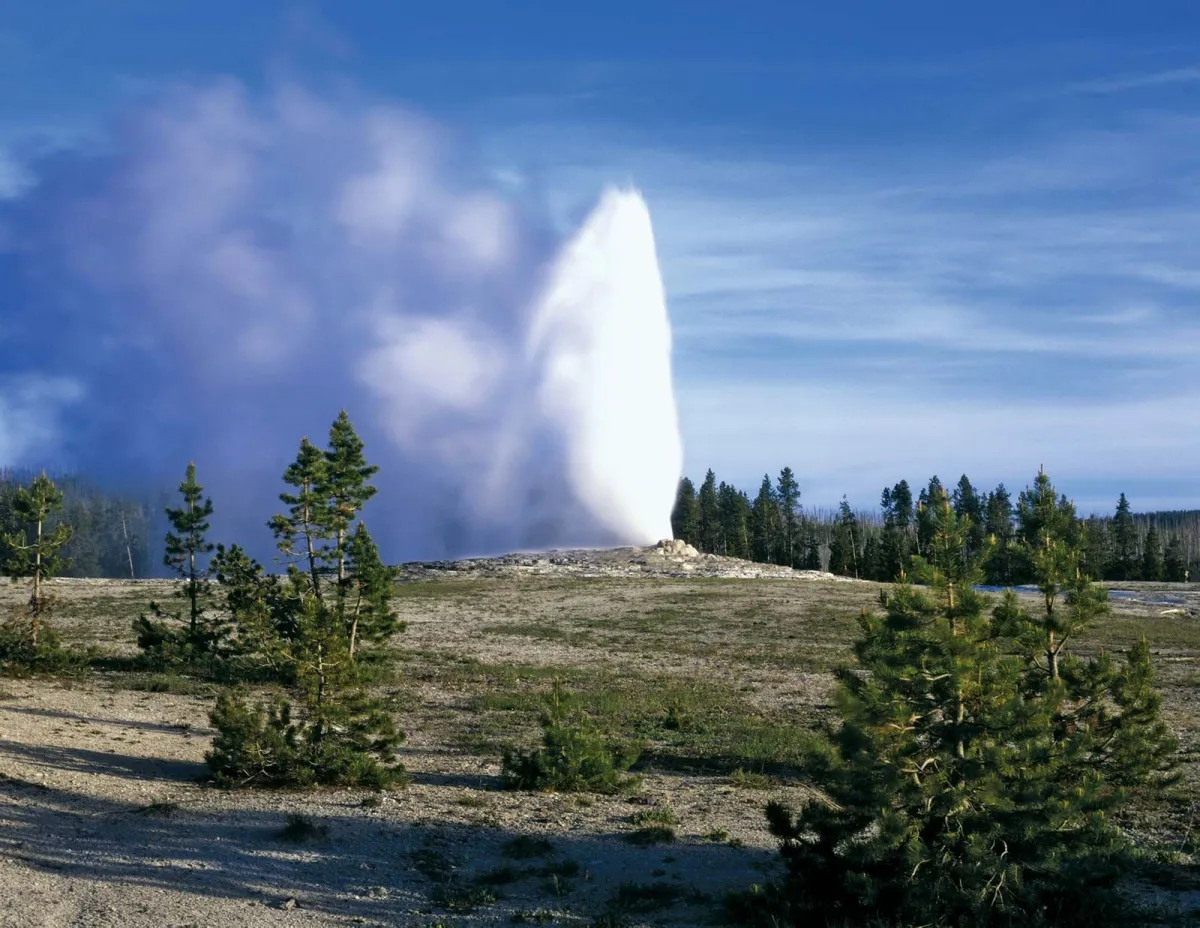 Photo: Yellowstone National Park, via cdn.britannica.com
The photography world moved on without him. Galleries stopped returning calls. Clients disappeared. Equipment manufacturers who once sought his endorsement suddenly had other priorities. In an industry obsessed with pixel-perfect clarity, a photographer losing his sight wasn't just a tragedy—it was a liability.
But Eckert refused to put down his camera.
Learning to See Without Sight
What happened next defied every assumption about vision, art, and human limitation. Unable to see through his viewfinder in the traditional way, Eckert developed an entirely new approach to photography. He learned to compose shots using his peripheral vision and muscle memory. He studied the behavior of light at different times of day until he could predict its quality without seeing it directly. Most remarkably, he began to capture images that conveyed emotion and atmosphere in ways his earlier, technically perfect work never had.
"I stopped trying to document what things looked like," Eckert later explained, "and started capturing what they felt like."
His subjects—often rural American landscapes and forgotten communities—seemed to reveal themselves differently to his altered perception. A weathered barn in Montana became a meditation on endurance. An elderly farmer's hands told stories of decades spent coaxing life from difficult soil. Children playing in a small-town street conveyed pure joy in ways that perfect focus never could.
The Art World's Blind Spot
For years, the fine art photography establishment dismissed Eckert's work. Gallery owners questioned how someone with severe vision loss could create "serious" art. Critics suggested his images lacked the technical precision that defined contemporary photography. Some even accused him of exploiting his disability for sympathy.
They were missing the point entirely.
Eckert's photographs weren't succeeding despite his vision loss—they were succeeding because of it. His inability to rely on traditional visual cues forced him to develop an almost supernatural sensitivity to composition, light, and moment. He could sense the perfect instant to capture a scene in ways that eluded photographers with perfect vision.
Recognition at Last
The breakthrough came in 2015 when a small gallery in Santa Fe took a chance on Eckert's work. The exhibition, titled "Seeing Beyond Sight," sold out on opening night. Word spread through the art world like wildfire. Here was a photographer who had redefined what vision meant in visual art.
 Photo: Santa Fe, via www.digitalcarmagazine.com.tr
Major museums began acquiring Eckert's work. The Smithsonian added three of his photographs to their permanent collection. The New York Times featured his story on the front page of their Arts section. Suddenly, the same galleries that had ignored him were competing for the chance to represent his work.
But the real validation came from an unexpected source: other photographers with vision loss. Eckert's success had proven that blindness wasn't a barrier to visual art—it was simply a different way of seeing. His workshops for photographers with vision impairments became legendary, teaching techniques that many sighted photographers began adopting.
The Deeper Truth
Eckert's story reveals something profound about human potential and the nature of limitation. His vision loss didn't end his career—it transformed it into something far more meaningful than anything he had achieved with perfect sight. The constraint that should have stopped him became the very thing that set him apart.
Today, his photographs hang in galleries across America, each one a testament to the idea that our greatest limitations can become our most powerful tools. They show us rural America through eyes that see differently, capturing truths that perfect vision often misses.
The Legacy of Different Vision
Pete Eckert's camera still clicks in places where others see only emptiness. His work continues to challenge assumptions about disability, art, and the very nature of seeing. In losing his central vision, he gained something far more valuable: the ability to show America itself in ways it had never been seen before.
His story reminds us that sometimes the greatest clarity comes not from perfect sight, but from learning to see the world through entirely new eyes. In the darkness that threatened to end his career, Eckert found a light that illuminated not just his own path, but the way forward for countless others who refuse to let limitation define their possibilities.