Speaking Without Words: The Immigrant Who Gave America Its First Voice for the Deaf

The Journey Across an Ocean of Silence
The ship that carried Laurent Clerc from Le Havre to New York in the summer of 1816 was filled with the usual sounds of ocean travel—creaking timber, shouting sailors, passengers conversing in a dozen languages. For Clerc, the journey passed in familiar silence.
 Photo: Laurent Clerc, via desklib.com
At thirty years old, the Frenchman had never heard a human voice. Deaf since childhood, he'd grown up in a world where his condition was seen as evidence of divine displeasure, where the deaf were often considered barely human. Yet by the time he disembarked in New York Harbor, Clerc carried with him something that would transform American society: a complete, sophisticated language that existed entirely in the movement of hands.
What happened next would challenge everything Americans believed about communication, intelligence, and human potential.
A Meeting of Minds
Clerc's journey to America began with Thomas Hopkins Gallaudet, a young Hartford minister whose encounter with a deaf child in his neighborhood had opened his eyes to an overlooked population. In 1815, Gallaudet had traveled to Europe seeking methods to educate the deaf, eventually arriving at the Royal Institution for the Deaf in Paris.
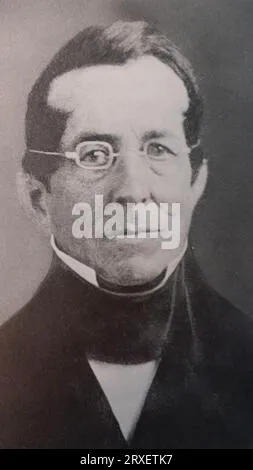 Photo: Thomas Hopkins Gallaudet, via l450v.alamy.com
There he met Clerc, a brilliant instructor who had not only mastered the French sign language developed at the school but had become one of its most effective teachers. Despite their inability to communicate through speech—Gallaudet knew no sign language, Clerc spoke no English—the two men recognized in each other a shared vision.
"M. Clerc possessed a mind of remarkable cultivation," Gallaudet later wrote. "Here was a man who, denied the gift of hearing, had developed faculties of communication and instruction that surpassed those of many who possessed all their senses."
Clerc's decision to accompany Gallaudet to America was extraordinary. He was leaving behind everything familiar—his position, his community, his native country—to venture into a nation where no systematic education for the deaf existed.
Building a Language from Nothing
The fifty-two-day voyage became an intensive education for both men. Gallaudet taught Clerc English through written words and finger spelling. Clerc, in return, instructed Gallaudet in French Sign Language, adapting and modifying signs for concepts that would resonate with American students.
By the time they reached New York, they had begun creating what would become American Sign Language—a unique blend of French signs, American innovations, and the natural gestures that deaf Americans had developed in isolation.
Their first challenge was convincing skeptical Americans that the deaf could be educated at all. In 1817, most Americans viewed deafness as an insurmountable barrier to learning. The prevailing belief held that without speech, true education was impossible.
The Hartford Experiment
On April 15, 1817, the American School for the Deaf opened its doors in Hartford, Connecticut, with seven students. Clerc, despite speaking no English aloud, became head instructor. His methods were revolutionary: instead of forcing deaf students to attempt speech—the predominant European approach—he taught them through sign language, treating their visual communication as legitimate and complete.
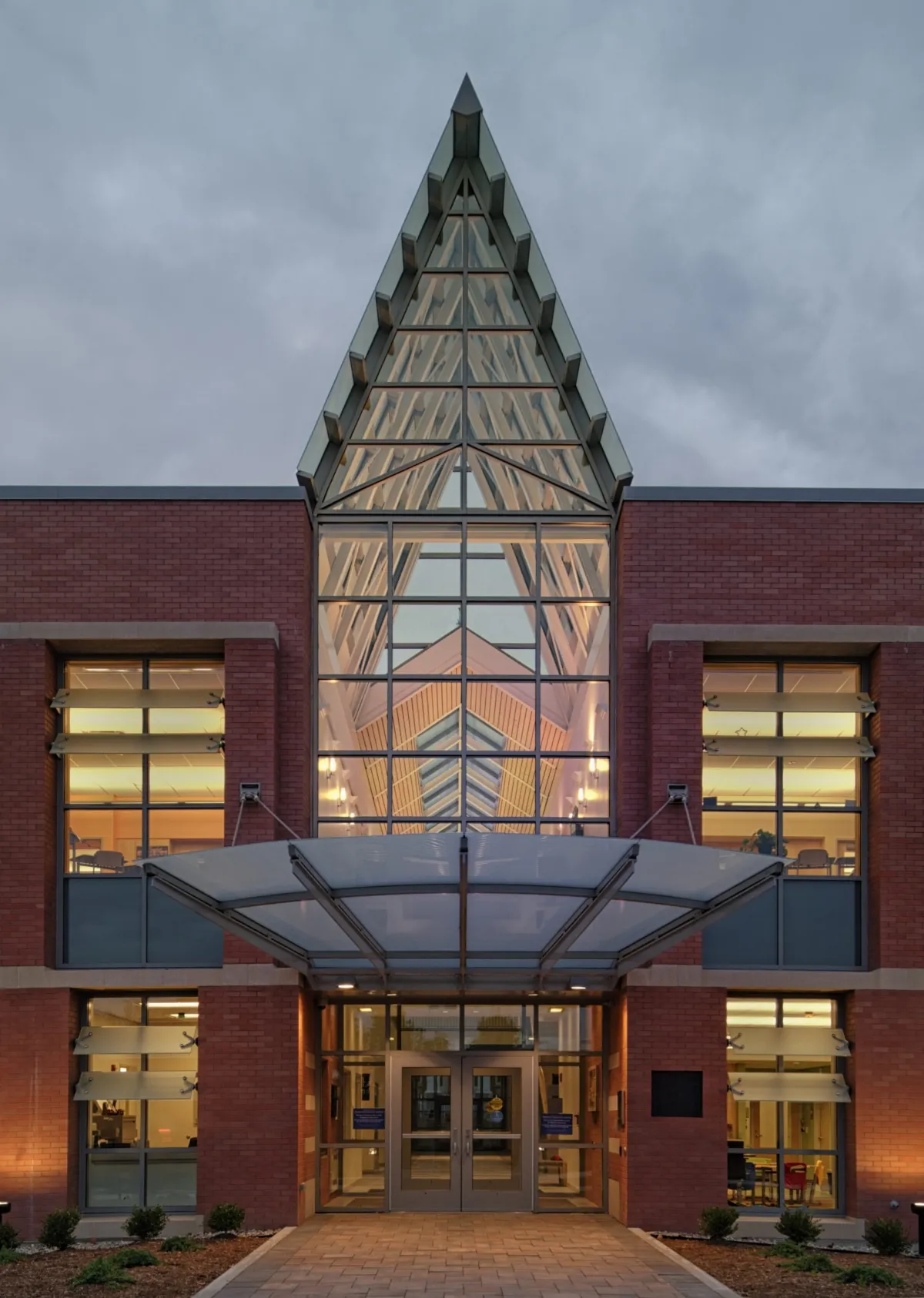 Photo: American School for the Deaf, via we-ha.com
The results were immediate and startling. Students who had been considered unteachable began demonstrating sophisticated understanding of mathematics, literature, and complex abstract concepts. Alice Cogswell, the deaf child whose plight had originally inspired Gallaudet, flourished under Clerc's instruction.
"The transformation was miraculous to witness," wrote a visiting educator. "Children who had lived in isolation, cut off from the world of ideas, suddenly had access to the full range of human knowledge. And it was M. Clerc, himself deaf, who opened these doors."
Changing a Nation's Mind
As word of the school's success spread, Clerc found himself at the center of a national conversation about disability, education, and human potential. He traveled throughout New England, demonstrating sign language and proving that deaf individuals could be productive, educated citizens.
These demonstrations were revelations for audiences accustomed to viewing deafness as tragedy. Clerc would engage in complex philosophical discussions, solve mathematical problems, and display encyclopedic knowledge—all without uttering a sound.
"Here was living proof," observed one newspaper editor, "that the human mind, deprived of one avenue of communication, could develop others to extraordinary heights."
Clerc's influence extended far beyond education. His presence in American society challenged fundamental assumptions about disability and capability. Deaf Americans, previously isolated and often institutionalized, began to see themselves as members of a community with its own language and culture.
The Ripple Effect
By 1850, the American School for the Deaf had graduated hundreds of students, many of whom became teachers themselves. Clerc's methods spread across the country as graduates established schools in other states. American Sign Language evolved and flourished, becoming the primary language of deaf Americans.
Clerc himself remained at Hartford for forty-one years, training generations of teachers and refining educational methods. He married Eliza Boardman, a former student, and raised a family while continuing to advocate for deaf education.
His impact was profound and lasting. Before Clerc's arrival, deaf Americans lived in isolation, cut off from education and community. After his work, they had schools, a shared language, and a sense of cultural identity that persists today.
A Silent Revolution
When Clerc retired in 1858, American deaf education had become a model for the world. The man who had arrived speaking no English had created an entire educational system, established a new language, and fundamentally altered how a nation viewed disability.
Perhaps most remarkably, Clerc achieved this transformation while never conforming to hearing society's expectations. He never learned to speak English aloud, never apologized for his deafness, never accepted the notion that he was somehow incomplete.
"M. Clerc taught us that communication is not about the sounds we make," reflected one of his former students, "but about the connections we forge. In his hands, silence became its own kind of eloquence."
Today, American Sign Language is recognized as a complete, sophisticated language used by hundreds of thousands of Americans. The deaf community Clerc helped establish continues to thrive, proud of its unique culture and identity. And in schools across the country, deaf children learn through methods that trace directly back to a French immigrant who proved that greatness sometimes speaks loudest in the language of hands.