Cut from the Squad, Built for the City: The Athlete Who Found His Field in Urban Renewal
The Cut That Changed Everything
Danny Morrison still remembers the exact words Coach Patterson used when he delivered the news in September 1967: "Son, you've got heart, but heart doesn't win games." The University of Michigan quarterback, who had transferred from a junior college with dreams of leading the Wolverines to glory, was being cut from the team after just six weeks of practice.
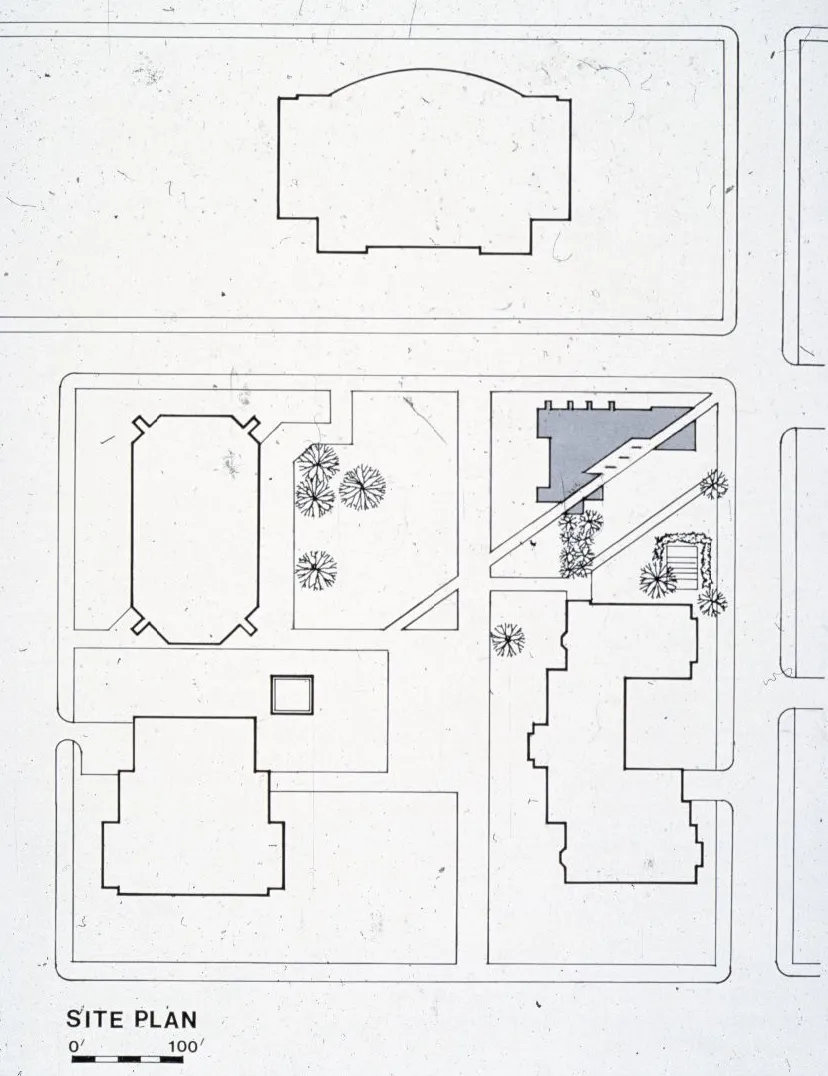 Photo: University of Michigan, via images.squarespace-cdn.com
Morrison had spent two years preparing for this moment. He'd studied film until his eyes burned, ran drills until his legs gave out, and visualized himself taking snaps in the Big House in front of 100,000 screaming fans. Instead, he found himself walking back to his dorm room, cleats in hand, wondering what came next.
What came next would reshape Detroit.
From Sidelines to City Lines
The humiliation of that cut did something unexpected to Morrison. Rather than crushing his competitive spirit, it refined it. "I realized I'd been training for the wrong game," he would later reflect. "I had all this drive, all this preparation, but I was pointing it at the wrong target."
Morrison switched his major from physical education to urban planning, a field that barely existed at most universities in 1967. While his former teammates were running plays, he was studying maps, learning about zoning laws, and developing an almost obsessive understanding of how cities worked—or in Detroit's case, how they stopped working.
The discipline he'd learned on the practice field translated perfectly to his new passion. Morrison approached urban planning like he'd approached quarterbacking: with relentless preparation, strategic thinking, and an unwavering belief that the right play call could change everything.
The Motor City's Unlikely Champion
By 1975, Detroit was hemorrhaging residents and businesses. The auto industry was struggling, the downtown core was hollowing out, and most urban planners were writing off large sections of the city as unsalvageable. Morrison saw something different.
He'd been hired by the city planning department straight out of graduate school, partly because few experienced planners wanted to tackle Detroit's seemingly impossible challenges. But Morrison's rejection-forged persistence made him perfect for the job nobody else wanted.
His first major project was the restoration of the Corktown neighborhood, a historic area that had been abandoned by most residents and ignored by most investors. Morrison spent months walking every street, talking to the handful of remaining residents, and developing what he called his "ground game"—a community-first approach to urban renewal that prioritized existing residents over outside developers.
The Playbook That Worked
Morrison's strategy was revolutionary in its simplicity. Instead of bulldozing struggling neighborhoods and starting over—the standard practice of the era—he focused on what he called "tactical preservation." He identified the strongest remaining elements of each community and built around them, the way a coach might design plays around his best players.
In Corktown, that meant saving the old train station and using it as an anchor for new development. In the Eastern Market area, it meant preserving the farmer's market that had operated since 1891 and creating housing and businesses that complemented rather than replaced the existing community.
The approach required the same kind of patience Morrison had learned waiting for his shot at quarterback—patience that, ironically, he never got to use on the football field. Project by project, block by block, Morrison began stitching Detroit back together.
The Victory That Mattered
By the early 1990s, Morrison's methods had been adopted across Detroit and studied by urban planners nationwide. The neighborhoods he'd helped restore were thriving, property values were rising, and young families were moving back to areas that had been written off as lost causes.
Morrison never got his moment under the Friday night lights, but he got something better: the chance to rebuild a city that millions of people called home. The competitive fire that had driven him toward football found a better outlet in urban renewal, and the rejection that had seemed like an ending became the beginning of a legacy that outlasted any game.
The Real Game
In 2010, when Morrison retired as Detroit's Director of Community Development, the city held a ceremony in his honor. Dozens of families whose neighborhoods he'd helped save attended, along with business owners whose districts had been revitalized under his guidance.
Coach Patterson, long retired himself, sent a letter that Morrison still keeps framed in his office: "Danny, I was wrong about your heart. Turns out it was big enough to win the game that really mattered."
Morrison's story reminds us that sometimes the most devastating rejections redirect us toward our true calling. The quarterback who never played found his field in the streets of Detroit, and the city is still benefiting from the game plan he developed after being told he wasn't good enough for the team.
The cut that ended his football dreams became the foundation for an urban legacy that no scoreboard could measure.