Wrong Look, Right Vision: The Misfits Who Rewrote the Rules After Being Shown the Door
They were told they didn't have the right face, voice, or background for success. Instead of changing themselves, they changed entire industries.
Remarkable lives. Unexpected paths. True stories.
They were told they didn't have the right face, voice, or background for success. Instead of changing themselves, they changed entire industries.
Lamberto Sorrentino spent his mornings checking hives in rural Virginia, but by 1943, he was running counterintelligence operations behind enemy lines in occupied Italy. His secret weapon wasn't training or technology—it was a lifetime of watching, waiting, and understanding when something didn't belong.
From the telephone to the internet, America's most transformative innovations survived not because of institutional support, but despite institutional rejection. These five near-misses reveal how close we came to missing the technologies that would define modern life.
When segregation and poverty barred him from formal education, Thomas Washington Jones didn't give up on learning—he made it his life's mission to ensure no one else would face the same barriers. By 1952, the man who couldn't attend school was running the largest public library system in the South.
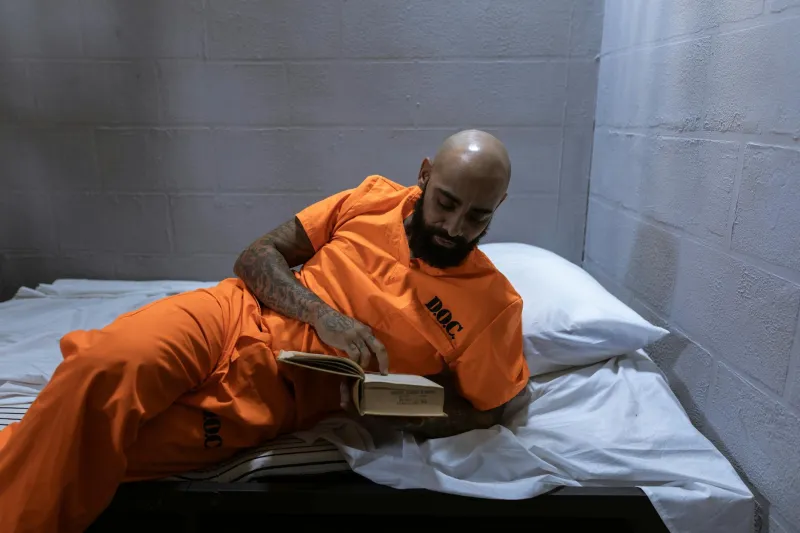
Jimmy Lee Sudduth spent eighteen years in federal prison for armed robbery. When he walked out, his paintings had already made him one of America's most celebrated folk artists. This is the story of how a man found his voice in the last place anyone expected to hear it.
While Detroit was selling speed and style, Joan Claybrook was counting bodies. Her relentless pursuit of highway safety data in the 1960s forced America to confront an uncomfortable truth: its cars were designed to protect profits, not people. The fight that followed would save millions of lives.
Laurent Clerc stepped off a ship in 1816 speaking no English and bearing the stigma of deafness in a world that saw it as divine punishment. Within a decade, he had revolutionized American education and given hundreds of thousands of people a language they never knew they could have.
Sometimes the best person for a job is exactly the person everyone said couldn't do it. These six Americans turned rejection into revolution, proving that the most transformative leaders are often the ones nobody saw coming.
Maxine Chen's manuscript was rejected by every major publisher in New York—some twice. But her refusal to disappear quietly didn't just launch her career; it forced American publishing to confront what it had been missing all along.
When promising quarterback Danny Morrison was humiliatingly cut from his college team, he thought his dreams were over. Instead, that devastating rejection became the foundation for one of the most remarkable urban turnarounds in American history.
Jay 'Ding' Darling never set foot in a science classroom or held elected office, yet he convinced an entire nation to care about conservation through nothing more than satirical drawings. His cartoons didn't just win Pulitzer Prizes — they created the federal programs that still protect millions of acres of American wilderness today.
Alice Hamilton was denied faculty positions, excluded from medical conferences, and told her research was worthless — yet she created an entire field of medicine that protects millions of workers today. Her secret weapon wasn't credentials or connections, but her willingness to go where respectable doctors refused to venture.
William Levitt couldn't finish college and failed at his first several businesses, but he solved America's post-war housing crisis by treating homes like cars on an assembly line. His revolutionary suburbs housed hundreds of thousands of returning veterans — while also creating the segregated landscape that still divides American communities today.
Some of America's most legendary coaches never starred as athletes — they built dynasties through pure intellect, obsessive preparation, and the outsider's advantage of seeing the game differently than everyone else.
While generals and diplomats deadlocked over Korean War peace talks, an unlikely mediator emerged from the produce aisles of Los Angeles. His story reveals how trust, built over decades in immigrant communities, became the key to unlocking one of the Cold War's most stubborn conflicts.
Herbert Yardley cracked enemy codes for America's intelligence services, only to find himself silenced and cast aside. When Washington slammed the door on his career, he opened a window to an entirely different stage — one where fiction became his most dangerous weapon.
Before he revolutionized NFL strategy from the sidelines, he was the guy who swept locker rooms and hauled water buckets. Meet the high school dropout whose decades in football's shadows prepared him to become the sport's most innovative genius.
A Utah beekeeper's daughter who started teaching in rural Massachusetts ended up transforming how 300 million Americans shop. Esther Peterson never ran for office, but she wielded more power over your grocery cart than most senators.
Jimmy Carter left Washington in 1981 as a one-term president dismissed by critics and voters alike. What happened next would prove that sometimes your greatest chapter begins only after the world writes you off.
While Martin Luther King Jr. gave speeches that moved the world, Septima Poinsette Clark was in church basements and community centers, teaching sharecroppers and domestic workers to read the words that would let them vote. Her network of secret schools across the rural South became the unsung foundation of the entire Civil Rights Movement.