The Wrong Person for the Right Job: Six Americans Who Proved the Gatekeepers Wrong

When "No" Means "Not Yet"
History is full of people who were told they were the wrong person for the job—only to become the most consequential person to ever hold it. These six Americans didn't just prove their critics wrong; they redefined what success looked like in their fields.
1. The Secretary Who Became the CEO
Katharine Graham, The Washington Post
When Katharine Graham's husband died by suicide in 1963, the board of The Washington Post had a problem. The newspaper needed leadership, but Graham—a housewife and mother who had never worked in journalism—was the only family member available to take over.
The board's solution was to find a "real" CEO and have Graham serve as a figurehead. "She's a lovely woman," one board member reportedly said, "but running a newspaper isn't exactly hosting dinner parties."
Graham had other ideas. She spent her first year learning every aspect of the business, from the printing presses to the advertising department. When editors initially tried to shield her from controversial decisions, she insisted on being involved in everything.
Her defining moment came during the Pentagon Papers crisis in 1971. Despite pressure from the Nixon administration and threats of prosecution, Graham made the decision to publish the classified documents that revealed government deception about the Vietnam War.
The woman who was supposed to be a placeholder became one of the most influential media figures of the 20th century. Under her leadership, The Post won 17 Pulitzer Prizes and became the newspaper that brought down a president during Watergate.
2. The College Dropout Who Saved American Manufacturing
Ray Kroc, McDonald's Corporation
In 1954, Ray Kroc was a 52-year-old traveling milkshake machine salesman who had never run a restaurant. When he approached the McDonald brothers about franchising their California burger stand, they were skeptical. "Ray's a nice guy," Dick McDonald later recalled, "but what does he know about food?"
The answer was: nothing. But Kroc understood something the McDonald brothers didn't—systems.
While traditional restaurateurs focused on recipes and ambiance, Kroc treated McDonald's like a manufacturing operation. He standardized everything: cooking times, portion sizes, employee uniforms, even the angle at which burgers were placed on buns.
Restaurant industry veterans mocked his approach. "Real chefs don't cook with stopwatches," one competitor sneered. But Kroc's obsession with consistency and efficiency created something entirely new: fast food that was actually fast, and cheap food that was reliably edible.
By the time he died in 1984, the man who "didn't know about food" had built the world's largest restaurant chain and revolutionized American eating habits forever.
3. The Nurse Who Wasn't Supposed to Lead
Clara Barton, American Red Cross
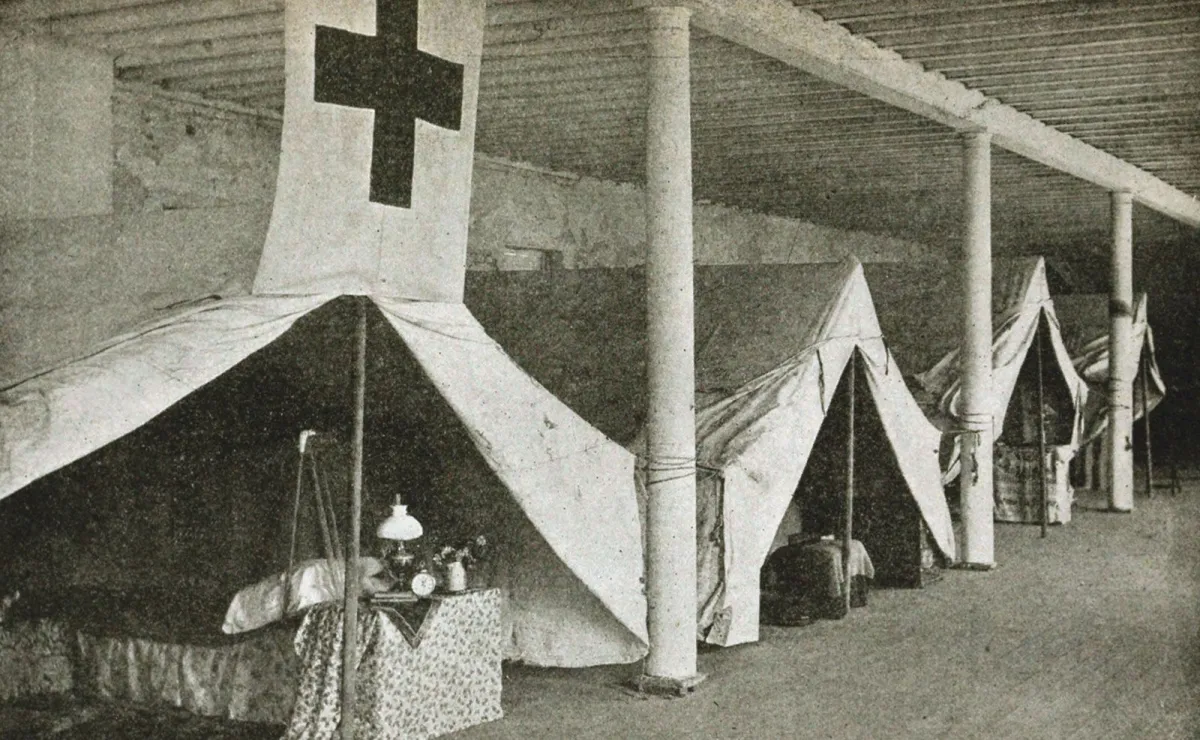 Photo: Clara Barton, via cdn.britannica.com
When Clara Barton founded the American Red Cross in 1881, the medical establishment was horrified. Nursing was considered women's work, but running a national organization was definitely men's work. The American Medical Association formally protested her appointment, arguing that "medical relief efforts require military precision that women cannot provide."
Barton had already proven them wrong during the Civil War, when she organized supply lines and field hospitals that were more efficient than anything the official military medical corps had managed. But peacetime leadership was supposed to be different.
It was. Barton's Red Cross was better.
She pioneered disaster relief methods that are still used today: pre-positioned supplies, rapid response teams, and coordination with local authorities. When the Johnstown Flood devastated Pennsylvania in 1889, Barton's Red Cross arrived before federal relief efforts and stayed longer.
The medical establishment that had dismissed her eventually adopted her methods. The woman who was "too emotional" to lead became the standard for calm, effective crisis management.
4. The Immigrant Who Couldn't Get Hired
An Wang, Wang Laboratories
When An Wang arrived in America from China in 1945 with $40 and a physics PhD, major corporations wouldn't hire him. "Too foreign," was the common response. IBM, RCA, and Bell Labs all passed on the brilliant young engineer.
So Wang started his own company in a Boston garage, focusing on computer memory systems that the big companies insisted had no commercial future. "Who needs to store that much information?" an IBM executive reportedly asked.
Wang's answer came in the form of word processors that revolutionized office work in the 1970s and 80s. His company grew to employ 33,000 people and generated billions in revenue. The immigrant who couldn't get hired became one of the most successful technology entrepreneurs of his generation.
More importantly, Wang's success opened doors for other immigrant engineers and entrepreneurs. The companies that had rejected him for being "too foreign" eventually scrambled to hire engineers from his native China.
5. The Woman Who Wasn't Supposed to Explore
Dian Fossey, Gorilla Research
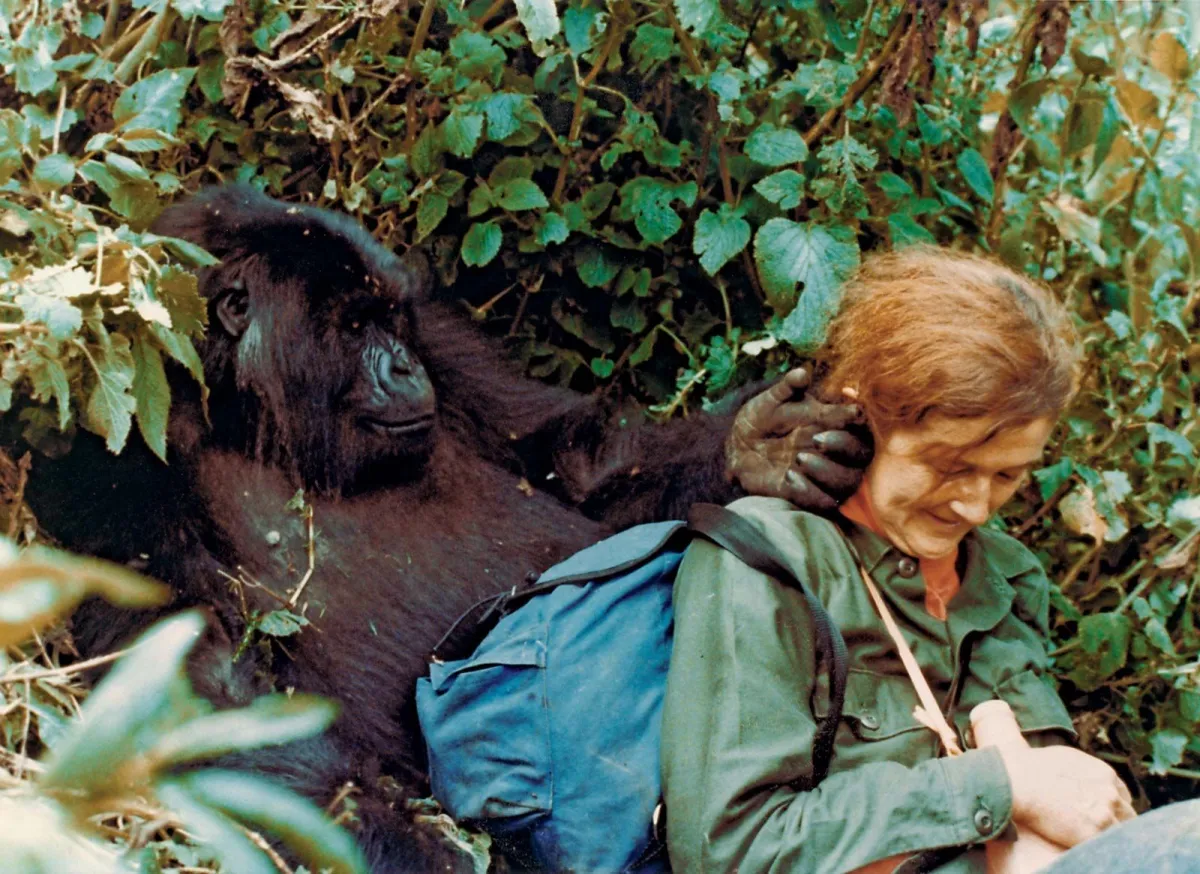 Photo: Dian Fossey, via cdn.britannica.com
When Dian Fossey applied to study mountain gorillas in Rwanda in 1966, she had no scientific training, no research experience, and no knowledge of African languages or customs. The National Geographic Society's initial response was polite but firm: "Field research requires extensive preparation that you simply don't have."
Fossey's persistence eventually wore them down, but expectations remained low. She was given minimal funding and a six-month timeline—enough to satisfy her curiosity and get her out of the way.
Instead, Fossey revolutionized primatology. Her patient, immersive approach—living among the gorillas rather than observing from a distance—produced insights that transformed scientific understanding of these creatures. Her work proved that gorillas were gentle, intelligent, and highly social.
More importantly, her research became the foundation for conservation efforts that saved mountain gorillas from extinction. The woman who "wasn't qualified" to study gorillas became their most effective advocate.
6. The Mechanic Who Couldn't Design
Soichiro Honda, Honda Motor Company
When Soichiro Honda tried to sell his motorcycle designs to established manufacturers in the 1940s, he was laughed out of boardrooms across Japan. "You're a mechanic," one executive told him. "Leave design to the engineers."
Honda's background was indeed unconventional. He'd learned about engines by fixing bicycles and cars, not by studying engineering in university. His designs looked different from traditional motorcycles—simpler, more efficient, less impressive to industry veterans.
But Honda's mechanic's perspective was exactly what the industry needed. While established manufacturers focused on making motorcycles more powerful and complex, Honda focused on making them more reliable and affordable.
His simple, practical designs conquered first Japan, then the world. The mechanic who "couldn't design" built one of the world's largest automotive companies and proved that sometimes the best way to improve something is to understand how it breaks.
The Pattern of Possibility
These six stories share a common thread: the people who were "wrong" for their jobs brought exactly the perspective those jobs needed. They succeeded not despite their unconventional backgrounds, but because of them.
Their stories remind us that gatekeepers are often protecting gates that need to be opened. Sometimes the most transformative leaders are the ones nobody saw coming—because they're looking at old problems with completely new eyes.