The Quiet Teacher Who Taught America to Vote
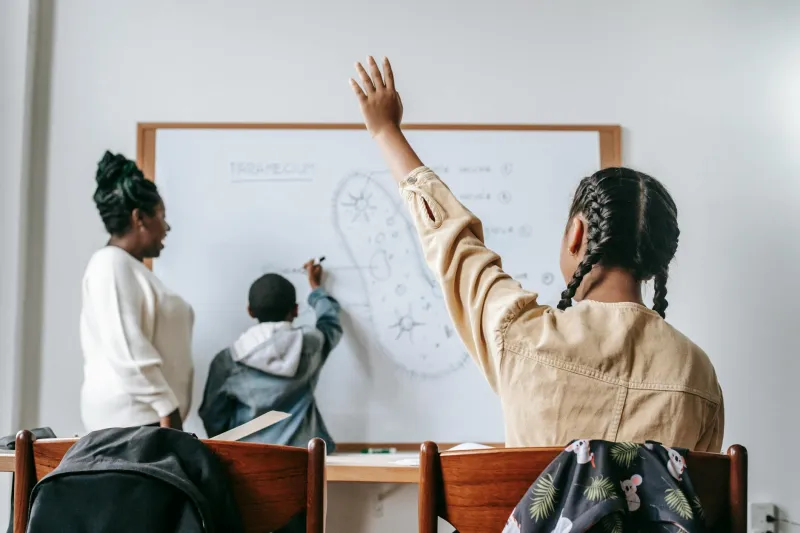
In 1956, while the Montgomery Bus Boycott grabbed headlines across America, a 58-year-old teacher named Septima Poinsette Clark was doing something far less glamorous but equally revolutionary. In a cramped room on Johns Island, South Carolina, she was teaching a group of farmworkers how to read the Constitution.
Most of them had never held a ballot. Many couldn't write their own names. But Clark knew something the rest of America was just beginning to understand: the Civil Rights Movement wouldn't be won in courtrooms or on television. It would be won one voter at a time.
The Making of an Unlikely Revolutionary
Clark didn't start out as a radical. Born in 1898 in Charleston to a washerwoman and a former slave, she followed the path expected of educated Black women in the Jim Crow South: she became a teacher. For nearly four decades, she worked within the system, earning respect in her community and a steady paycheck.
But in 1955, everything changed. South Carolina passed a law prohibiting public employees from belonging to civil rights organizations. Clark refused to abandon her membership in the NAACP. After 40 years of faithful service, she was fired.
Most people would have retreated. Clark saw an opportunity.
Building Schools in the Shadows
With backing from the Highlander Folk School in Tennessee, Clark began developing what she called "Citizenship Schools." The concept was deceptively simple: teach adults to read using materials that mattered to their lives—voter registration forms, Social Security applications, and yes, the Constitution.
But this wasn't just about literacy. Clark understood that in the rural South, the ability to read a ballot was literally the difference between freedom and oppression. Poll taxes and literacy tests had kept Black Americans from voting for generations. Clark's schools were designed to break that cycle.
She started small, training a handful of local leaders who could return to their communities and teach others. The network grew organically—a beautician in Alabama, a farmer in Mississippi, a domestic worker in Georgia. By 1961, Clark was overseeing hundreds of these schools across the South.
The Revolution No One Noticed
What made Clark's work so effective was also what made it invisible to the outside world. While other civil rights leaders organized dramatic protests that attracted media attention, Clark's revolution happened in church basements and community centers, one lesson at a time.
Her students weren't the college-educated activists who often dominated civil rights organizations. They were the people who cleaned houses, picked cotton, and worked in factories. They were the backbone of their communities, and once they could read and vote, they became the backbone of the movement itself.
The numbers tell the story: by the mid-1960s, Clark's Citizenship Schools had taught more than 25,000 people to read and helped register countless thousands to vote. When the Voting Rights Act passed in 1965, much of the infrastructure needed to implement it was already in place, thanks to Clark's quiet work.
Fighting Two Battles
What makes Clark's story even more remarkable is that she was fighting discrimination on two fronts. Not only was she challenging white supremacy, she was also battling sexism within the civil rights movement itself.
Despite the fact that her schools were training the foot soldiers of the movement, Clark was often excluded from strategy meetings and decision-making. Male leaders, including some she had worked with for years, dismissed her contributions as mere "teaching" rather than real organizing.
"I was on the executive staff of SCLC, but the men on it didn't listen to me too well," Clark later recalled. "They liked to send me into many places because I could always make a path in to get people to listen to what I have to say. But those men didn't have any faith in women, none whatsoever."
Yet Clark persisted, understanding that the movement needed her work even if its leaders didn't always appreciate it.
The Foundation Beneath the Famous
By the time Martin Luther King Jr. delivered his "I Have a Dream" speech in 1963, thousands of the people in the crowd had learned to read in Septima Clark's schools. When protesters marched in Selma in 1965, many had first learned about their voting rights in her citizenship classes.
Clark's students became the local leaders who organized boycotts, registered voters, and sustained the movement in small towns across the South. They were the ones who kept the lights on when the cameras left and the famous speakers went home.
A Different Kind of Monument
Septima Clark never got a national holiday or a monument on the National Mall. She didn't give speeches that are still quoted today or lead marches that changed history overnight. Instead, she did something arguably more important: she gave ordinary people the tools they needed to change history themselves.
When Clark died in 1987, she had lived to see the fruits of her labor. The students she had taught in cramped classrooms had elected mayors, state legislators, and members of Congress. They had transformed the political landscape of the South, one vote at a time.
Today, as Americans continue to grapple with questions of voting rights and civic participation, Clark's story offers a powerful reminder: sometimes the most transformative work happens not in the spotlight, but in the quiet spaces where people gather to learn, to grow, and to claim their place in democracy.
The revolution she armed wasn't fought with weapons or won with grand gestures. It was won with pencils and primers, patience and persistence—and the radical belief that everyone deserves to have their voice heard.