The Unexpected Messenger
In the summer of 1953, as Korean War armistice negotiations dragged through their second year of stalemate, the most important diplomatic breakthrough didn't happen in the formal meeting rooms of Panmunjom. It occurred in a small grocery store in Los Angeles's Koreatown, where a soft-spoken businessman named Kim Ho had been quietly building bridges between communities for over two decades.
Kim Ho wasn't a diplomat, a general, or a politician. He sold vegetables, managed community disputes, and helped new immigrants navigate American bureaucracy. But when President Syngman Rhee of South Korea needed someone he could trust to carry sensitive messages to Chinese and North Korean contacts, he turned to the grocer from California.
What happened next would help end a war that had claimed over three million lives, though Kim Ho's name would never appear in the history books.
Building Trust, One Customer at a Time
Kim Ho had arrived in Los Angeles in 1931, carrying nothing but a letter of introduction from a cousin and an unshakeable belief that America offered opportunities for those willing to work for them. He started as a day laborer in the produce markets, learning English from customers and saving every penny he could spare.
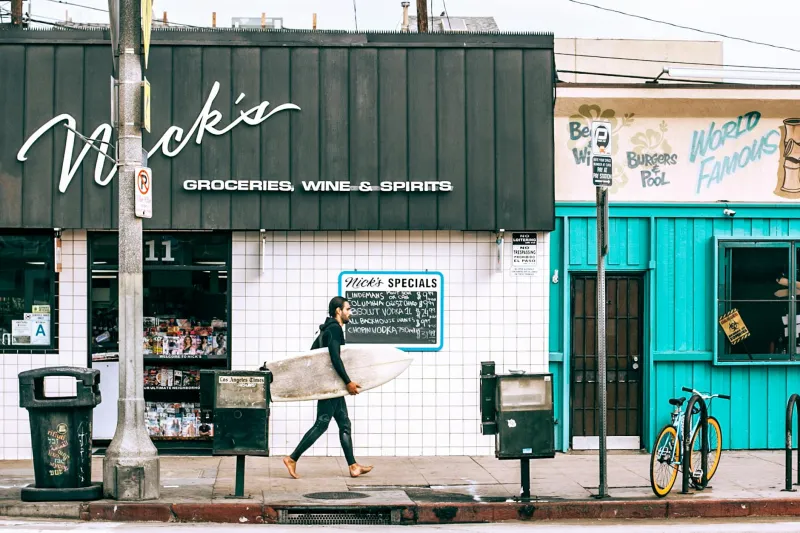
By 1935, he had opened Kim's Market on Western Avenue, serving the growing Korean community in Los Angeles. But Kim Ho understood something that many immigrant entrepreneurs missed: success in America required building relationships beyond your own community.
He extended credit to struggling families regardless of their background. He learned Spanish to serve his Mexican neighbors, picked up Mandarin to communicate with Chinese customers, and even studied Japanese to help the Nisei community during their darkest hours. When Japanese Americans were interned during World War II, Kim Ho quietly managed their properties and businesses, returning everything intact when they were released.
This network of trust, built through decades of small acts of kindness and reliability, would prove more valuable than any diplomatic credential.
The Back Channel Opens
By 1952, the Korean War had settled into a bloody stalemate. Peace talks had begun, but progress was agonizingly slow. President Rhee, despite being America's ally, had his own agenda that sometimes conflicted with U.S. objectives. He needed ways to communicate with Chinese and North Korean negotiators without going through American channels.
Rhee's representatives had noticed something interesting in their intelligence reports: Kim Ho's grocery store had become an informal meeting place for Koreans, Chinese, and other Asian immigrants in Los Angeles. Communist sympathizers, anti-communist refugees, and politically neutral immigrants all shopped there, drawn by Kim Ho's reputation for fairness and discretion.
More importantly, Kim Ho had maintained relationships with people on all sides of the Korean conflict. He had customers who had fled North Korea, others who supported reunification under communist leadership, and many who simply wanted the killing to stop. His store had become a neutral ground where opposing viewpoints could coexist.
The Grocer's Diplomatic Mission
In early 1953, a representative from the South Korean consulate approached Kim Ho with an unusual request. Would he be willing to host informal conversations with certain individuals who had connections to Chinese and North Korean negotiators? Nothing official, nothing that would compromise his business or his customers' trust — just quiet conversations over tea in the back room of his store.
Kim Ho understood the risks. His business could be destroyed if word leaked that he was involved in political activities. His family could face government scrutiny. His carefully built reputation for neutrality could be shattered overnight.
But he also understood what was at stake. Every day the war continued, more Koreans died. Families remained separated. His homeland continued to bleed.
He agreed, with one condition: any conversations in his store would focus on humanitarian concerns, not military strategy. He would help people talk, but he wouldn't betray anyone's trust.
Messages in the Margins
What followed was a delicate dance of informal diplomacy. Chinese-American community leaders, some with connections to Beijing, would stop by Kim's Market for "shopping" trips that lasted hours. Korean refugees with relatives in the North would linger over produce selections while sharing news from letters smuggled across the DMZ.
Kim Ho became a human switchboard, carefully relaying messages and managing conversations that couldn't happen through official channels. He learned which topics were too sensitive to discuss, which individuals could be trusted with certain information, and how to facilitate communication without appearing to take sides.
The breakthrough came in June 1953. A Chinese-American professor with connections to the Beijing government mentioned during a "casual" conversation that Chinese negotiators were more flexible on prisoner repatriation issues than their public statements suggested. This information, carefully passed through Kim Ho's network, eventually reached South Korean negotiators and helped break a key deadlock in the armistice talks.
The Price of Peace
The Korean War armistice was signed on July 27, 1953. Kim Ho watched the news coverage from his store, knowing that his small grocery had played a role in ending the conflict, but understanding that his contribution would never be publicly acknowledged.
In the months that followed, some customers stopped coming to his store. Word had quietly spread that Kim Ho had been involved in "political activities," and some in the Korean-American community viewed any contact with communist sympathizers as betrayal. His business suffered, though he never spoke publicly about his role in the peace process.
But other customers remained loyal, drawn by the same qualities that had made him an effective back-channel diplomat: his discretion, his fairness, and his genuine concern for people's welfare over political ideology.
The Invisible Infrastructure of Peace
Kim Ho's story reveals something profound about how diplomacy actually works. While historians focus on the formal negotiations, the grand strategies, and the political personalities, real breakthroughs often happen in spaces that exist outside official channels.
Trust, the essential ingredient in any negotiation, can't be manufactured in conference rooms. It has to be built over time, through consistent actions and genuine relationships. Kim Ho had spent twenty years building that trust, one customer interaction at a time, never knowing that it would eventually help end a war.
His grocery store became what diplomats call a "Track Two" diplomatic venue — an informal space where people could explore ideas and build understanding without the constraints of official positions. These spaces are crucial for resolving conflicts, but they depend on individuals willing to risk their own interests for the greater good.
Legacy of the Unlikely Diplomat
Kim Ho continued operating his grocery store until 1968, when he retired and moved back to Korea to spend his final years with family. He never wrote a memoir, never gave interviews about his role in the armistice negotiations, and never sought recognition for his contributions to ending the Korean War.
But his story demonstrates that some of history's most important work happens in the margins, performed by people whose names never make it into textbooks. The grocer who helped end a war reminds us that diplomacy isn't just the work of professionals in suits — sometimes it's the work of ordinary people who understand that building trust is the foundation of building peace.
In a world that often celebrates the dramatic gestures of famous leaders, Kim Ho's quiet effectiveness offers a different model of how change happens: slowly, carefully, and through the patient work of people who understand that the most important conversations often happen over a cup of tea in the back room of a neighborhood store.